

About The Project
Abstract
Tryptamine (TAM) and serotonin (SER) are two tryptophan-derived molecules belonging to the indolamine family. In plants, they are mainly known as intermediates in melatonin biosynthesis, a key compound involved in stress responses, embryo development, and morphogenesis.
Although found at high concentrations in the fruits and seeds of many species, their precise biological role remains unclear.
Our research on tomato (Solanum lycopersicum cv. MicroTom) has characterized the genes responsible for TAM and SER synthesis and successfully modulated their levels through genetic engineering and external applications.
0
+
Team Members
0
Partner Institutions
0
+
Research Days
0
K€+
Budget Invested
in-depth analysis
About The Project Tam&Ser
Tryptamine (TAM) and serotonin (SER) are two compounds derived from tryptophan that belong to a widespread class of bioactive molecules known as indolamines or indole alkaloids. In plants, TAM and SER are primarily recognized as intermediates in the biosynthesis of melatonin, a well-studied molecule involved in crucial biological processes such as responses to biotic and abiotic stress, reactive oxygen species (ROS) scavenging, embryo development, and plant morphogenesis (Negri et al., 2021).
Although TAM and SER have been detected at high concentrations (μg/g of fresh weight) in the edible fruits and seeds of numerous plant species, their biological functions in reproductive organs remain unclear, and their metabolic pathways still need to be fully elucidated.
The biosynthesis of TAM and SER in plants typically involves consecutive decarboxylation and hydroxylation reactions of tryptophan, catalyzed by the enzymes tryptophan decarboxylase (TDC) and tryptamine 5-hydroxylase (T5H), respectively.
Our recent research has focused on the functional characterization of a three-member TDC gene family and a single T5H gene involved in the biosynthesis of TAM and SER in the model species Solanum lycopersicum cv. MicroTom.
Our findings support a model in which SlTDC1 promotes TAM accumulation in fruits, SlTDC2 mediates TAM production in aerial vegetative organs, TDC3 drives TAM synthesis in roots and seeds, and T5H is responsible for the conversion of TAM to SER throughout the plant (Commisso et al., 2022).
Currently, the objective of our research project is to discover the biological role that these two indolamines play in higher plants.
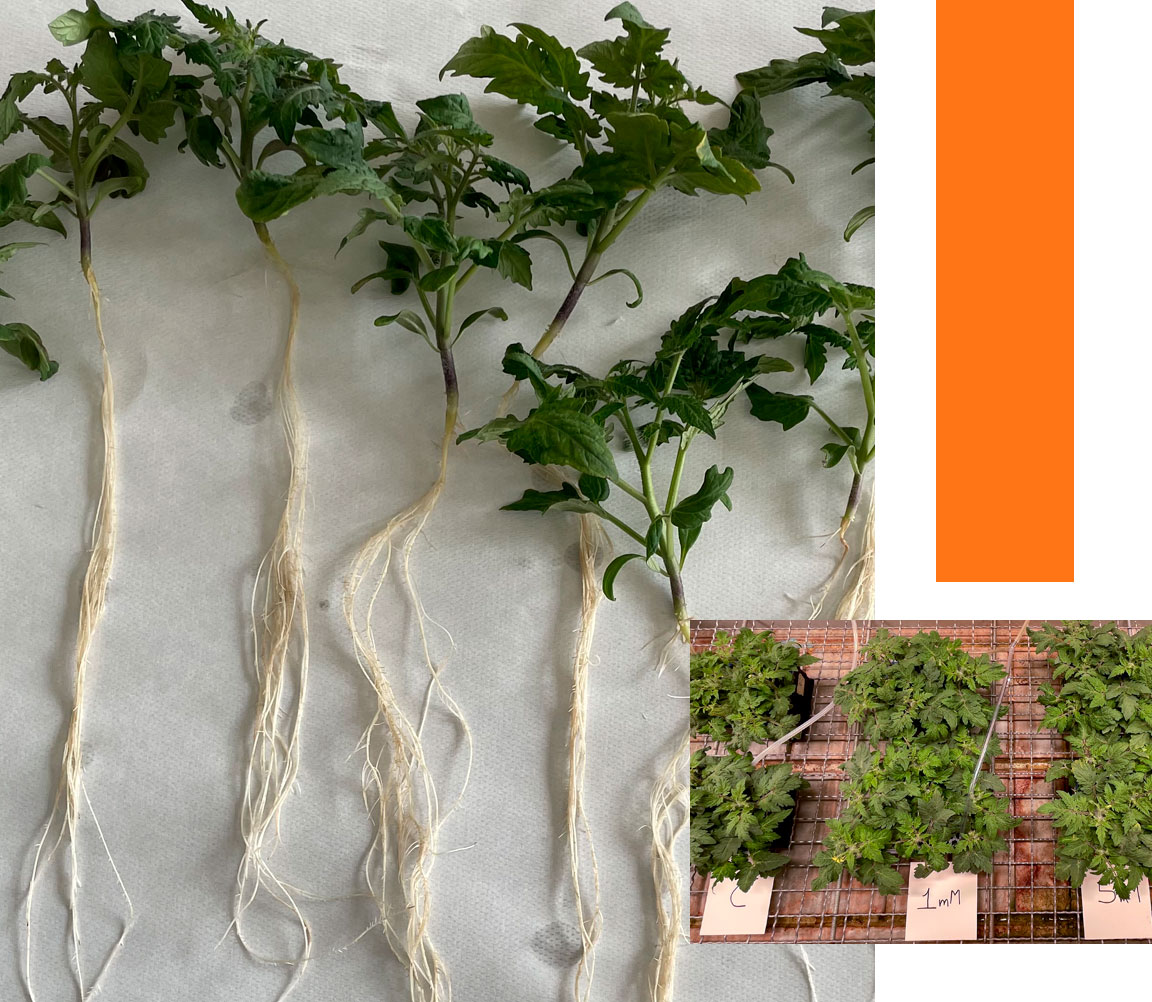
To this end, by using genetic engineering techniques or through the exogenous administration of TAM and SER, we have successfully modified the endogenous levels of these molecules in various organs of the tomato plant.
Reference
Negri, S., Commisso, M., Avesani, L., & Guzzo, F. (2021). The case of tryptamine and serotonin in plants: a mysterious precursor for an illustrious metabolite. Journal of Experimental Botany, 72(15), 5336-5355.
Commisso, M., Negri, S., Gecchele, E., Fazion, E., Pontoriero, C., Avesani, L., & Guzzo, F. (2022). Indolamine accumulation and TDC/T5H expression profiles reveal the complex and dynamic regulation of serotonin biosynthesis in tomato (Solanum lycopersicum L.). Frontiers in plant science, 13, 975434.
Feedback
What Are They Saying About Company

Alex Gorsky
Web Developer
Lorem ipsum dolor sit amet, consectetur adipiscing elit, sed do eiusmod tempor incididunt ut labore et dolore magna aliqua.

Tamara McGahey
Web Developer
Lorem ipsum dolor sit amet, consectetur adipiscing elit, sed do eiusmod tempor incididunt ut labore et dolore magna aliqua.

Kenneth Williams
Web Developer
Lorem ipsum dolor sit amet, consectetur adipiscing elit, sed do eiusmod tempor incididunt ut labore et dolore magna aliqua.

Tamara McGahey
Web Developer
Lorem ipsum dolor sit amet, consectetur adipiscing elit, sed do eiusmod tempor incididunt ut labore et dolore magna aliqua.