CNR-IBBA
About us
The Institute of Agricultural Biology and Biotechnology of the National Research Council (CNR-IBBA) carries out research, technology transfer, and training activities with the mission of expanding scientific knowledge on the molecular mechanisms that regulate the functioning of biological systems of agronomic interest in plants, animals, and microbes. The goal is to develop programs to improve the quality and sustainability of agri-food production. The Institute is part of the Department of Bio-Agrifood Sciences and is organized into a central office in Milan and three secondary locations in Lodi, Pisa, and Rome.
Two senior researchers from CNR-IBBA, Cristiana Sbrana (Pisa site) and Elena Baldoni (Milan site), along with research fellow Maria Grazia Caruso, recruited for the TAM&SER project and working at the Pisa site, participate in the TAM&SER project.
Department of Chemical, Life and Environmental Sustainability Sciences
Our vision
The Department harmoniously integrates the core university activities: research, education, and third mission.
Interaction and collaboration among researchers and professors with diverse and highly qualified expertise lay the groundwork for innovative and integrated approaches to the major challenges facing our planet.
Special attention is given to the use of environmental resources for sustainable development, with the aim of training a new generation of graduates who are responsible and aware of the challenges of the new millennium.
Knowledge dissemination and technology transfer—the heart of the third mission—leverage the Department’s rich and diverse cultural environment to enrich the public, institutions, and local industries.
Our mission
We aim to contribute to the advancement of knowledge in individual disciplines and in interdisciplinary and multidisciplinary fields that help address the most pressing problems of modern society.
Chemistry, Earth sciences, life sciences, and biology in their various forms, including the agri-food sector, will be explored to develop new methods and concepts for environmental sustainability, in line with the principles of the University of Parma’s Statute.
We are aware that sustainable economic development cannot exist without respecting and preserving the environment, based on knowledge of its living and non-living components.
Sustainability is one of the Department’s cornerstones and plays a cross-cutting role across various research areas including new materials, green technologies, new investigative techniques, and predictive models of biological and geological systems. The Department acts as a driver for local economic activities, particularly in the agro-industrial and food sectors, as well as in energy production, waste cycle management, and the development of new materials and sensing devices.
People involved in the project
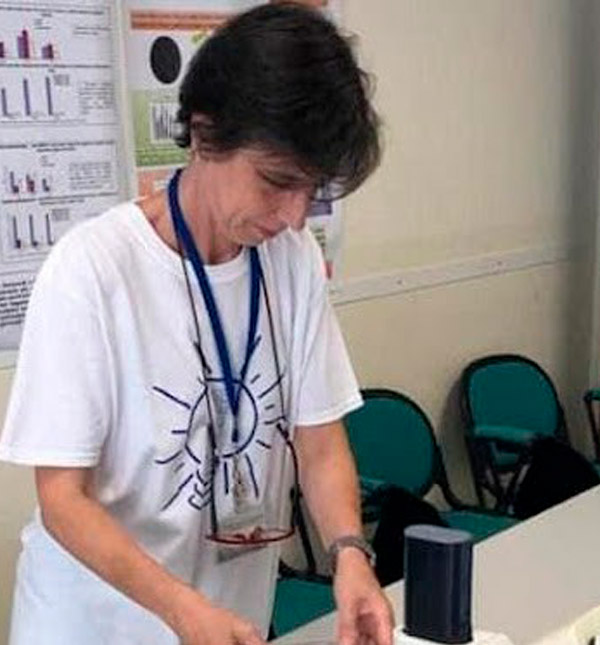
studies plant-soil microorganism relationships and is the curator of the CNR-MLIP microbial collection, which includes bacterial and fungal isolates of agronomic and environmental interest. These isolates, characterized through microscopy, phenotypic, and molecular analyses, are tested—either individually or in consortia—for their use as biofertilizers and biostimulants.
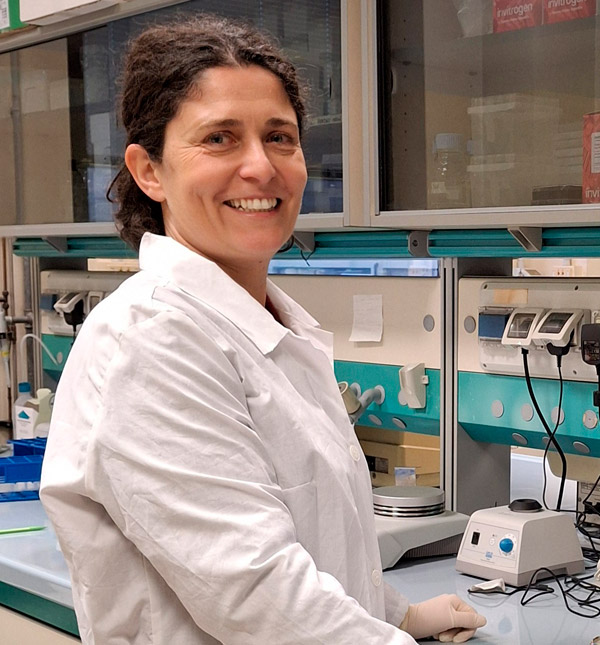
has long focused on the study of plant responses to abiotic stress in crop species. To this end, she uses molecular technologies for the functional characterization of specific genes, particularly transcription factors, and transcriptomic approaches to globally analyze gene expression changes that occur in plants under specific environmental conditions.
Activities within the Project
The research conducted by the IBBA team in the TAM&SER project focuses on plant responses to stress and their interactions with rhizospheric and endophytic microorganisms.
Elena Baldoni is responsible for gene expression analyses to assess the response of tomato (MicroTom variety) to abiotic stress and treatment with tyramine or serotonin, with the aim of evaluating how these molecules influence tomato responses to environmental stimuli. These analyses will also be conducted on transgenic plants with modified expression of genes involved in the synthesis of these molecules.
Cristiana Sbrana is responsible for the functional analysis of endophytes isolated from MicroTom (Year 1), followed by metagenomic analyses to obtain information on the structure and composition of the MicroTom microbiome.
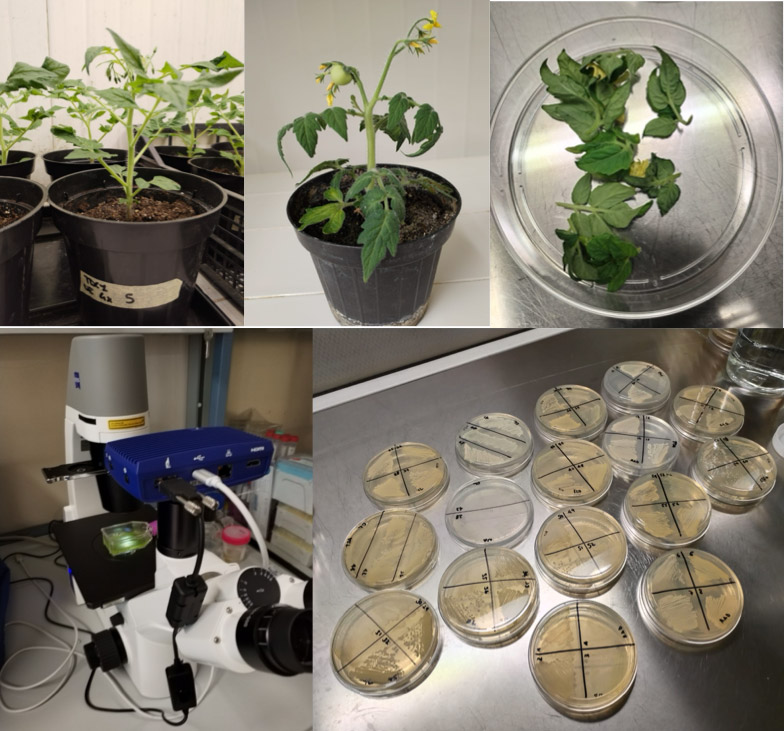
Year 1 experimentation: top – MicroTom seedlings grown in a climate chamber at IBBA Pisa and their explants used for endophyte isolation; bottom – observation under an inverted microscope of leaf homogenate in incubation and Petri dishes containing purified endophyte isolates obtained from MicroTom explants.